The Last Black Hole: The End Before A New Big Bang Beginning

image001

Is it possible that the last ultimate black hole could be the last step before the next beginning? I believe so. The following is my novel theory I call big bangs continuum.

I think we are in a Big Bang cycle, still expanding and accelerating, but eventually the universe, in my theory, will start collapsing.

I believe that Black Holes, at the centre of Galaxies, will continue absorbing stars, binary stars, gas clouds, dust, matter, anti-matter, and anything else in it until they will have absorbed the entire Galaxy.

“Black holes, which form out of the collapse of matter, have such high density that nothing can escape their gravitational pull — not even light. They cannot be seen directly, but their influence on nearby stars is visible and provides a signature,” according to Andrea Ghez, professor of physics and astronomy in the UCLA College.

I believe, when all Galaxies will have been absorbed by their own ultimate massive black hole, another step will occur: inter-galaxies cluster black holes will form and all galaxies will be absorbed into the next astronomical inter-galactic black hole.

In my own theory, this black hole cycle will continue until or before all known and unknown matter will reside in the last ultimate universal black hole, at that point all will be contained in this final place and the final collection will be so dense, and collapse in itself into pure energy, when all matter will change form into pure energy that will inevitably create the next big bang and the next universal cycle of life will begin possibly again and again forever ad Infinitum. *

My own original theory, on this possible eternal cycle, differ with the current established one, where “entropy of the universe”** would be the last step into a permanent conclusion of matter and life.

My theory by contrast would comply in physics, with the law of conservation of energy which states that the total energy of an isolated system cannot change, it is said to be conserved over time.
Energy can be neither created nor destroyed, but can change form from matter into pure energy for the next big bangs where pure energy will change again into matter and antimatter.
I am an optimist and I believe in second, or infinite, opportunities, I hope the universe is no different and multiple or infinite big bangs are given to us.

I developed this theory in my dreams, while talking to my father in law Sal, who passed away a few years ago, who I call with the mathematical symbol ∞. ***
Roberto Portolese
* In context, it usually means “continue forever, without limit” and thus can be used to describe a non-terminating process, a non-terminating repeating process, or a set of instructions to be repeated “forever,” among other uses.
(From Wikipedia, the free encyclopedia, Wikipedia® is a registered trademark of the Wikipedia Foundation, Inc., a non-profit organization.)

** The heat death of the universe is a historically suggested ultimate fate of the universe in which the universe has diminished to a state of no thermodynamic free energy and therefore can no longer sustain processes that consume energy (including computation and life). Heat death does not imply any particular absolute temperature; it only requires that temperature differences or other processes may no longer be exploited to perform work. In the language of physics, this is when the universe reaches thermodynamic equilibrium (maximum entropy). The hypothesis of heat death stems from the ideas of William Thomson, 1st Baron Kelvin, who in the 1850s took the theory of heat as mechanical energy loss in nature (as embodied in the first two laws of thermodynamics) and extrapolated it to larger processes on a universal scale.

In a more recent view than Kelvin’s, it has been recognized by a respected authority on thermodynamics, Max Planck, that the phrase ‘entropy of the universe’ has no meaning because it admits of no accurate definition.[1][2] Kelvin’s speculation falls with this recognition.

Also: From the Big Bang through the present day and well into the future, matter and dark matter in the universe are thought to be concentrated in stars, galaxies, and galaxy clusters. Therefore, the universe is not in thermodynamic equilibrium and objects can do physical work.[18], §VID. The decay time for a supermassive black hole of roughly 1 galaxy-mass (1011 solar masses) due to Hawking radiation is on the order of 10100 years,[19] so entropy can be produced until at least that time. After that time, the universe enters the so-called dark era, and is expected to consist chiefly of a dilute gas of photons and leptons.[18], §VIA. With only very diffuse matter remaining, activity in the universe will have tailed off dramatically, with extremely low energy levels and extremely long time scales. Speculatively, it is possible that the universe may enter a second inflationary epoch, or, assuming that the current vacuum state is a false vacuum, the vacuum may decay into a lower-energy state.[18], §VE. It is also possible that entropy production will cease and the universe will achieve heat death.[18], §VID. Possibly another universe could be created by random quantum fluctuations or quantum tunnelling in roughly years.[20] Over an infinite time there would be a spontaneous entropy decrease by Poincaré recurrence theorem, thermal fluctuations[21][22] and Fluctuation theorem.[23][24](From Wikipedia, the free encyclopedia)

*** Infinity (symbol: ∞) is an abstract concept describing something without any limit and is relevant in a number of fields, predominantly mathematics and physics. In mathematics, “infinity” is often incorrectly treated as if it were a number. In this context infinity is not itself a quantity but rather a direction or open possibility. Georg Cantor formalized many ideas related to infinity and infinite sets during the late 19th and early 20th centuries. In the theory he developed, there are infinite sets of different sizes (called cardinalities).[1] For example, the set of integers is countably infinite, while the infinite set of real numbers is uncountable.[2]

The earliest recorded idea of infinity comes from Anaximander, a pre-Socratic Greek philosopher who lived in Miletus. He used the word apeiron which means infinite or limitless.[3] However, the earliest attemptable accounts of mathematical infinity come from Zeno of Elea (c. 490 BCE? – c. 430 BCE?), a pre-Socratic Greek philosopher of southern Italy and member of the Eleatic School founded by Parmenides. Aristotle called him the inventor of the dialectic. He is best known for his paradoxes, described by Bertrand Russell as “immeasurably subtle and profound”.

In accordance with the traditional view of Aristotle, the Hellenistic Greeks generally preferred to distinguish the potential infinity from the actual infinity; for example, instead of saying that there are an infinity of primes, Euclid prefers instead to say that there are more prime numbers than contained in any given collection of prime numbers (Elements, Book IX, Proposition 20).

However, recent readings of the Archimedes Palimpsest have hinted that Archimedes at least had an intuition about actual infinite quantities. (From Wikipedia, the free encyclopedia)

Big Bangs Continuum Theory
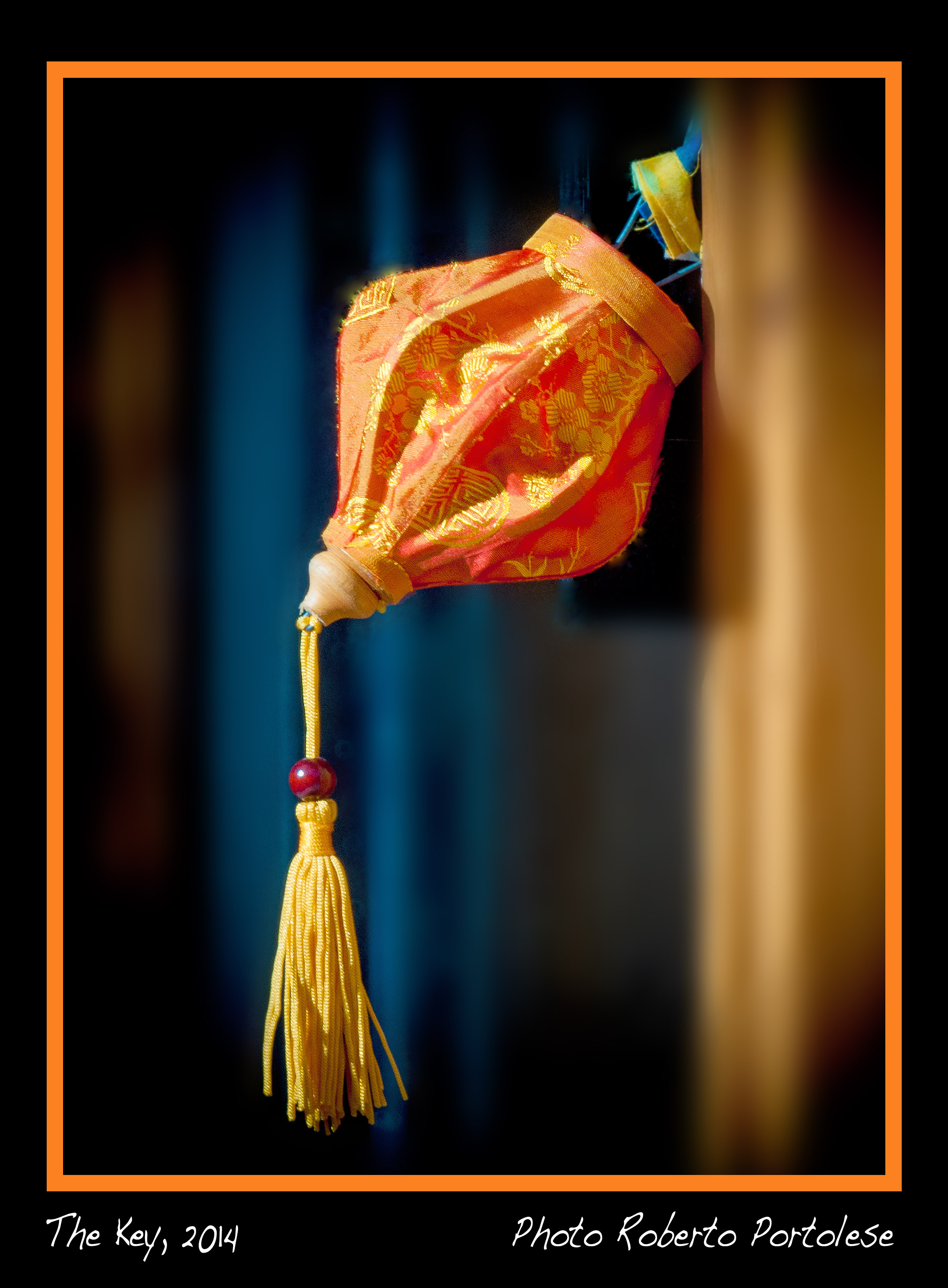
Love: “The Key”…my orange support for today International Day for the Elimination of Violence Against Women.

Today is the International Day for the Elimination of #ViolenceAgainstWomen and Girls.

TheKey1_edited-1
One in three women around the world experience physical or sexual violence from a partner, or by a non-partner at some point in their lives – with serious impacts on psychological and physical health. http://goo.gl/UNiazx
Today, the 25 November 2014, WHO joins organizations and individuals worldwide in observing the International Day for the Elimination of Violence against Women, an annual event to raise awareness and accelerate progress towards ending the global scourge of violence against women and girls. Estimates suggest that one in three women globally have experienced either physical or sexual violence from a partner, or sexual violence by a non-partner at some point in their lives, and that levels of violence against women and girls remain extremely high.

16 days of activism follow this event, ending on 10 December, Human Rights Day, to mobilize support for the cause of ending violence. The UN Secretary-General’s UNiTE to End Violence against Women campaign, invites people across the globe to lend their support and to ‘Orange Your Neighbourhood’ – to wear and use the colour orange to symbolize a brighter future without violence.

CottageRobyBook

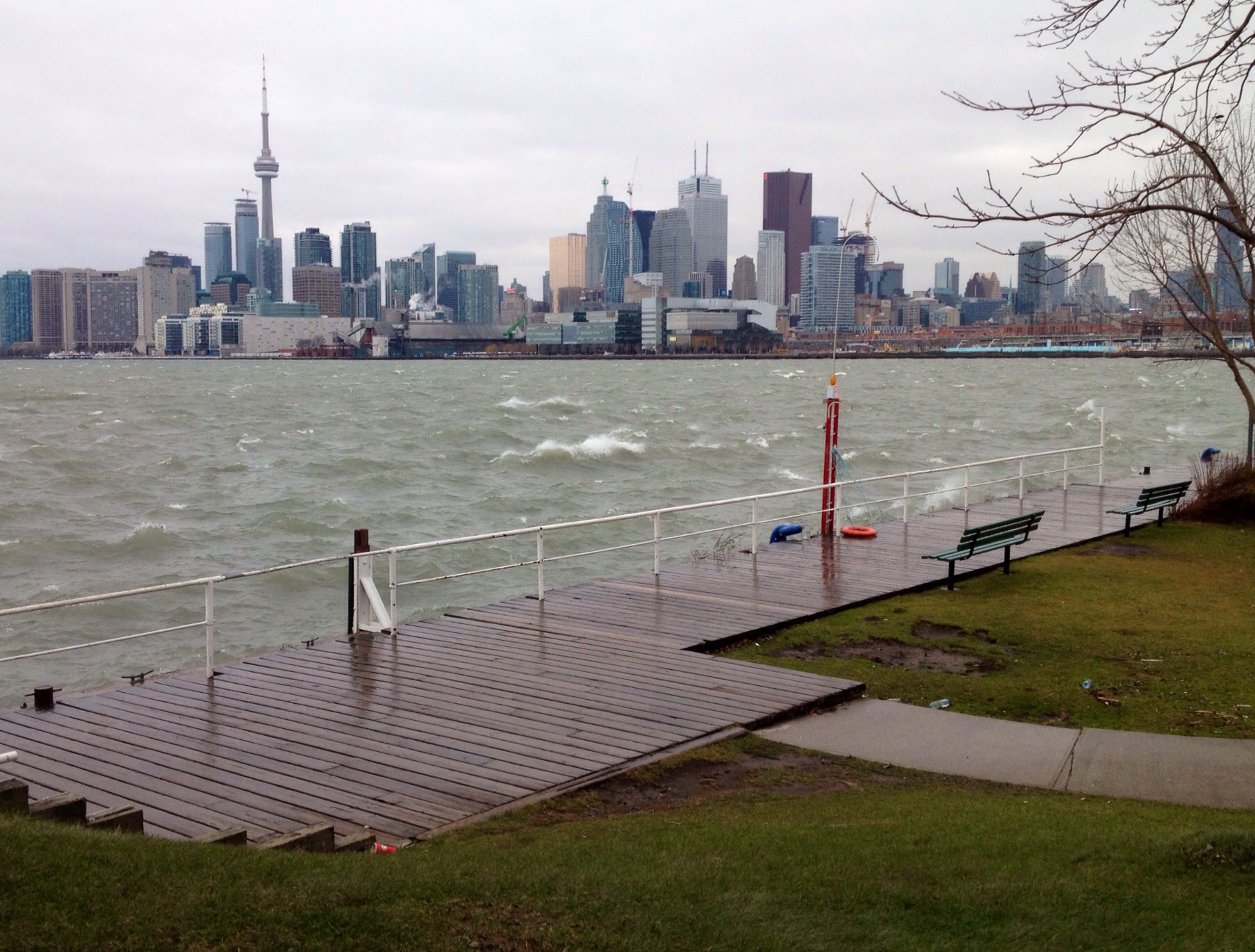
November in Toronto, iPhone Photography Series

Toronto Skyline, Photo Roberto Portolese

Toronto Skyline, iPhone Photo Roberto Portolese

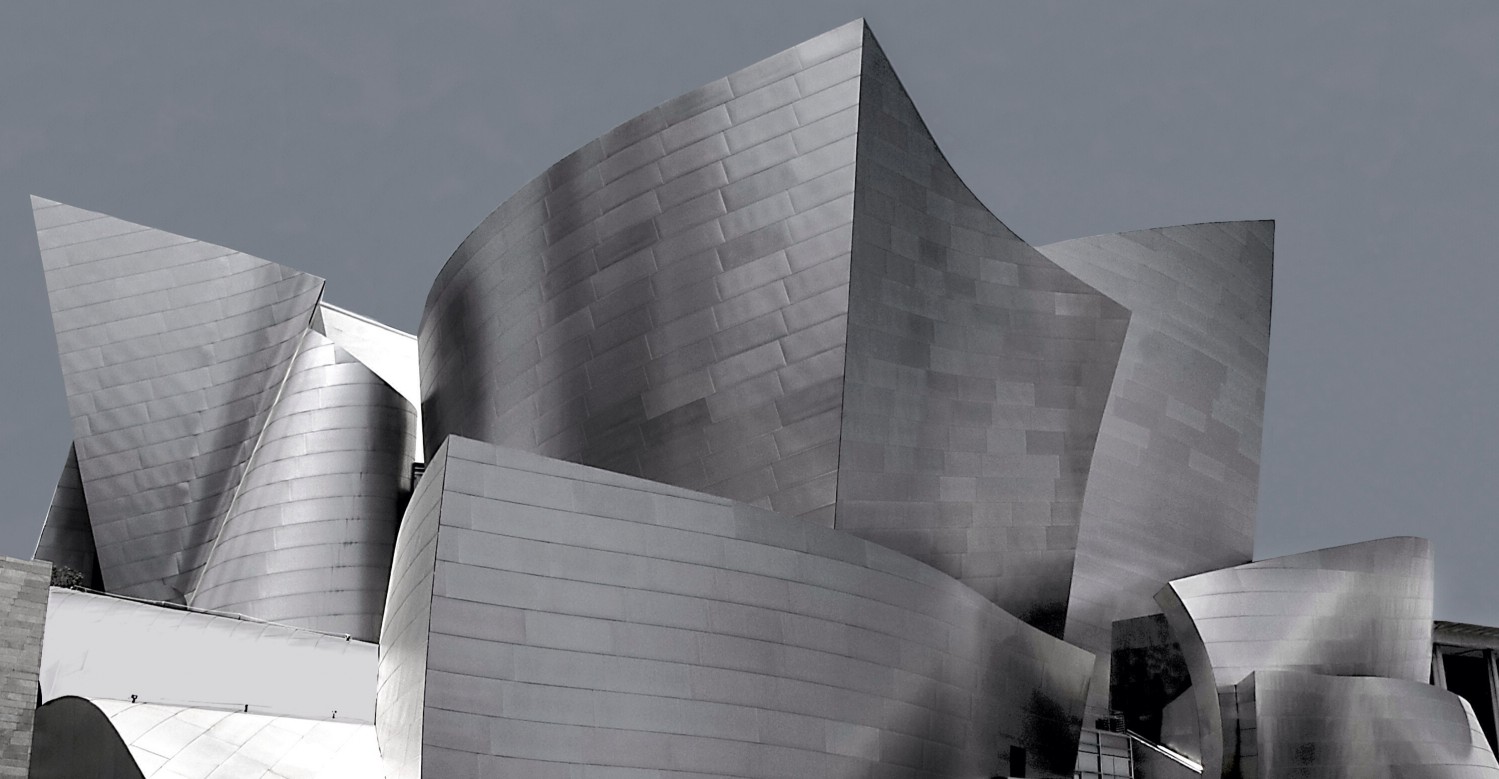
iPhone Detail Photography, Roberto Portolese

iPhone Detail Photography, Roberto Portolese

iPhone Detail Photography, Roberto Portolese

iPhone Detail Photography, Roberto Portolese

Yesterday I forgot my Nikon D90 at home, so I decided to do some photography with my phone, it is an older model but the results are not so bad, even the close-up photography of details, still I prefer my DSLR: …never leave home without your best camera…

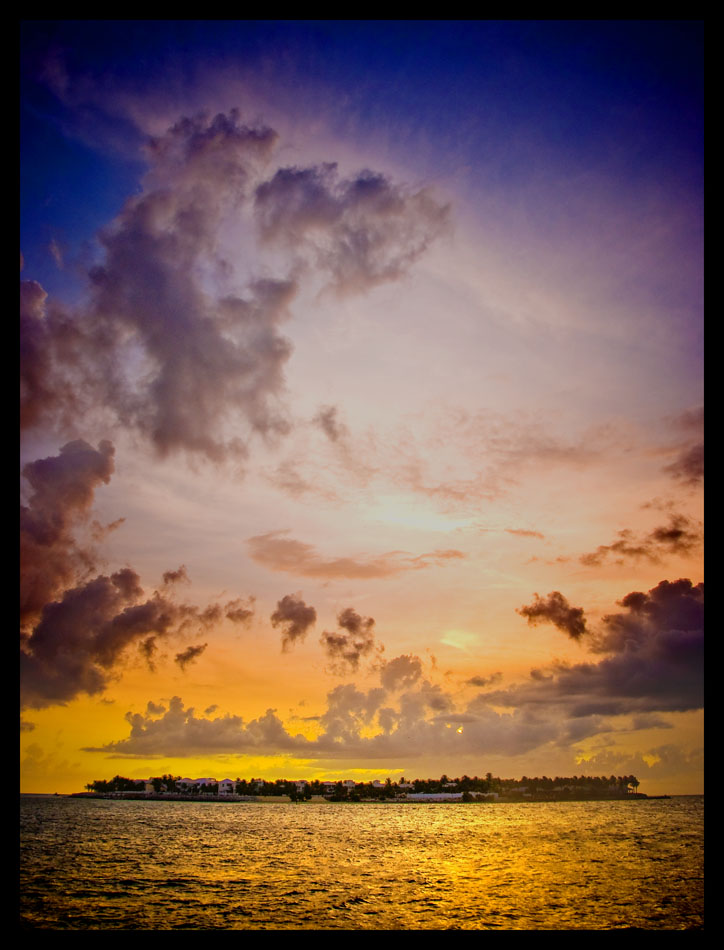
Toronto, iPhone Photo Roberto Portolese

Toronto, iPhone Photo Roberto Portolese

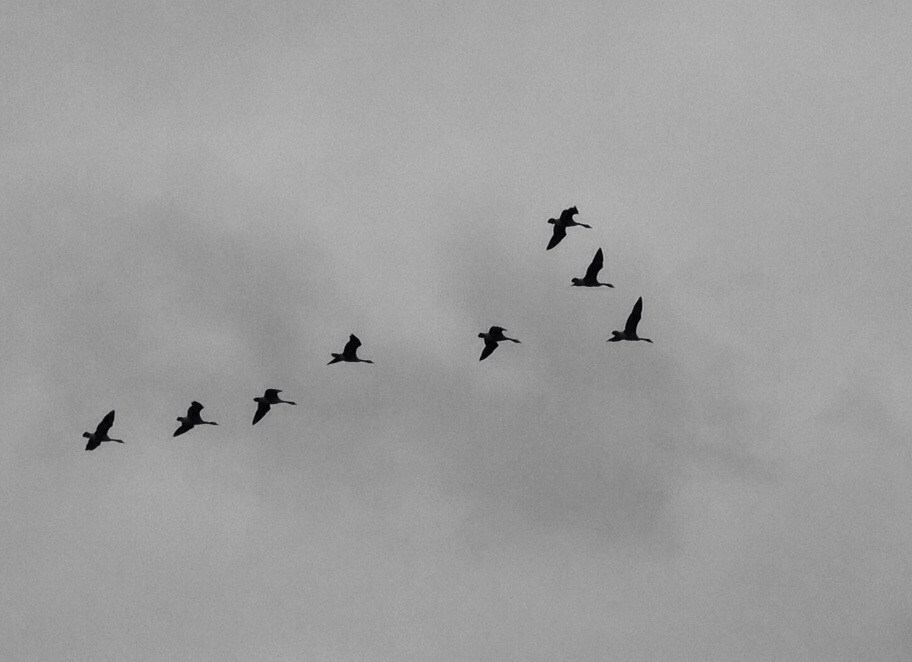
Flying, iPhone Photo Roberto Portolese

Flying, iPhone Photo Roberto Portolese

Toronto, iPhone Photo Roberto Portolese

Toronto, iPhone Photo Roberto Portolese

Photographing a Legend

This is a portrait I took of Muddy Waters, during his visit in Turin, Italy, where he also performed. c.1972.

This is a portrait I took of Muddy Waters, during his visit in Turin, Italy, where he also performed. c.1972.

His influence is tremendous, over a variety of music genres: blues, rhythm and blues, rock ‘n’ roll, hard rock, folk, jazz, and country. He also helped Chuck Berry get his first record contract.

His 1958 tour of England marked possibly the first time amplified, modern urban blues was heard there, although on his first tour he was the only one amplified. His backing was provided by Englishman Chris Barber’s trad jazz group. (One critic retreated to the toilets to write his review because he found the band so loud).

His use of amplification is cited as “the technological missing link between Delta Blues and Rock ‘N’ Roll.”[23] This is underlined in a 1968 article in Rolling Stone magazine: “There was a difference between Muddy’s instrumental work and that of House and Johnson, however, and the crucial difference was the result of Waters’ use of the electric guitar on his Aristocrat sides; he had taken up the instrument shortly after moving to Chicago in 1943.”[24]

The Rolling Stones named themselves after his 1950 song “Rollin’ Stone” (also known as “Catfish Blues”, which Jimi Hendrix covered as well). The magazine Rolling Stone also took its name from the same song. Hendrix recalled “the first guitar player I was aware of was Muddy Waters. I first heard him as a little boy and it scared me to death”. Cream covered “Rollin’ and Tumblin'” on their 1966 debut album Fresh Cream, as Eric Clapton was a big fan of Muddy Waters when he was growing up, and his music influenced Clapton’s music career. The song was also covered by Canned Heat at the legendary Monterey Pop Festival and later adapted by Bob Dylan on the album Modern Times. One of Led Zeppelin’s biggest hits, “Whole Lotta Love”, is lyrically based upon the Muddy Waters hit “You Need Love”, written by Willie Dixon. Dixon wrote some of Muddy Waters’ most famous songs, including “I Just Want to Make Love to You” (a big radio hit for Etta James, as well as the 1970s rock band Foghat), “Hoochie Coochie Man”, which The Allman Brothers Band famously covered (the song was also covered by Humble Pie and Steppenwolf), “Trouble No More” and “I’m Ready”. In 1993, Paul Rodgers released the album Muddy Water Blues: A Tribute to Muddy Waters, on which he covered a number of Muddy Waters songs, including “Louisiana Blues”, “Rollin’ Stone”, “Hoochie Coochie Man” and “I’m Ready” (among others) in collaboration with a number of famous guitarists including Gary Moore, Brian May and Jeff Beck.

Angus Young of the rock group AC/DC has cited Muddy Waters as one of his influences. The AC/DC song title “You Shook Me All Night Long” came from lyrics of the Muddy Waters song “You Shook Me”, written by Willie Dixon and J. B. Lenoir. Earl Hooker first recorded it as an instrumental, which was then overdubbed with vocals by Muddy Waters in 1962. Led Zeppelin also covered it on their debut album.

Muddy Waters’ songs have been featured in long-time fan Martin Scorsese’s movies, including The Color of Money, Goodfellas and Casino. Muddy Waters’ 1970s recording of his mid-’50s hit “Mannish Boy” (a.k.a. “I’m A Man”) was used in Goodfellas, Better Off Dead, and the hit film Risky Business, and also features in the rockumentary The Last Waltz.

The song “Come Together” by The Beatles references Muddy Waters: “He roller coaster/he got Muddy Waters.”

Van Morrison lyrics include “Muddy Waters singin’, “I’m a Rolling Stone” from his 1982 song “Cleaning Windows”, on the album Beautiful Vision.

American Stoner Metal band Bongzilla covered Muddy Water’s song Champagne and Reefer on their album Amerijuanican.

In 2008, Jeffrey Wright portrayed Muddy in the biopic Cadillac Records, a film about the rise and fall of Chess Records and the lives of its recording artists. A second 2008 film about Leonard Chess and Chess Records, Who Do You Love, also covers Muddy’s time at Chess Records.

In the 2009 film The Boat that Rocked (retitled Pirate Radio in the U.S) about pirate radio in the UK, the cryptic message that late-night DJ Bob gives to Carl to give to Carl’s mother is: “Muddy Waters Rocks.”

In 1990, the television show Doogie Howser, M.D. featured an episode called “Doogie Sings the Blues” with the main character, Blind Otis Lemon, based on Muddy Waters, with references to his influence on the Rolling Stones and Led Zeppelin, along with the performance of “Got My Mojo Working” by Blind Otis Lemon. He is also referred to as the original “Hoochie Coochie Man”.

This page was last modified on 14 November 2014 at 20:22.
Text is available under the Creative Commons Attribution-ShareAlike License; additional terms may apply. By using this site, you agree to the Terms of Use and Privacy Policy. Wikipedia® is a registered trademark of the Wikimedia Foundation, Inc., a non-profit organization.

Bird of Paradise Drink Decoration

BirdOfParadiseDrinkDecoration1

Yesterday I prepared a new drink for my wife’s birthday, Lemon Drink, Peach Drink, Lemoncello and a little Ontario Ice Wine: it was delicious! I wanted to make it very special, so I put my artist hat and sculpted a bird of paradise decoration out of a wedge of a pineapple and here it is: The Bird of Paradise Roberto’s Cocktail.

CottageRobyBook

Nepal Peace Pagoda

Nepal Peace Pagoda

Nepal Peace Pagoda Photo Roberto Portolese

In 1986, the United Nations International Year of Peace, the Kingdom of Nepal agreed to participate in World Expo ’88, and the Association to Preserve Asian Culture was commissioned to create, operate for the Expo, and find a new home for the Pagoda at the Expo’s conclusion.

The Peace Pagoda was built by German architect Jochen Reier (APAC) on behalf of the Kingdom of Nepal. Immediately, 80 tonnes of indigenous Nepalese timber were sourced from the Terai jungle forest of Nepal, carted across to the capital Kathmandu where 160 Nepalese families worked for two years at crafting its diverse elements. These were then shipped to Australia in two 40-foot containers and one 20-foot container, where they were assembled at the Expo site by a handful of Australian workers under Nepalese supervision. The final assembly for World Expo ’88 only took a few days.

Above text from Wikimedia it is available under the Creative Commons Attribution-ShareAlike License; additional terms may apply. By using this site, you agree to the Terms of Use and Privacy Policy. Wikipedia® is a registered trademark of the Wikimedia Foundation, Inc., a non-profit organization.

Books | For inspiring books visit: The Office of His Holiness The Dalai Lama Website

CottageRobyBook